Intellectual Property, Licensing and Legal Concerns
Intellectual Property
Material created on a computer is the intellectual property of the creator or an organization.Notice what that sentence does not contain. There is no registration step, no fee, no form and no moment at which the work becomes owned. It is owned because somebody made it.
Ease of access and distribution of digitized information raises intellectual property concerns regarding ownership, value, and use.
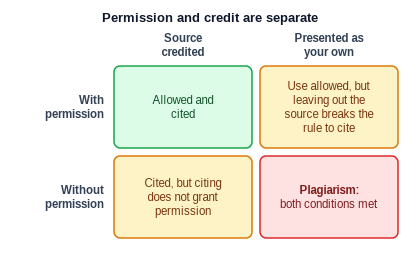
The use of material created by someone other than you should always be cited.
Measures should be taken to safeguard intellectual property.
The use of material created by someone else without permission and presented as one's own is plagiarism and may have legal consequences.
Licences That Grant Permission
Creative Commons, open source and open access have enabled broad access to digital information. Open and curated scientific databases have benefited scientific researchers.Each of the three terms below is a way of GIVING permission in advance, which is why they exist at all. If access by itself carried permission there would be nothing for them to do.
| Term | Definition | Used when |
|---|---|---|
| Creative Commons | A public copyright license that enables the free distribution of an otherwise copyrighted work | The content creator wants to give others the right to share, use, and build upon the work they have created |
| Open source | Programs that are made freely available and may be redistributed and modified | Its author wants anyone to be able to use, change and pass it on, as with the Firefox browser |
| Open access | Online research output free of any and all restrictions on access and free of many restrictions on use, such as copyright or license restrictions | Research is published so that anyone may reach it |
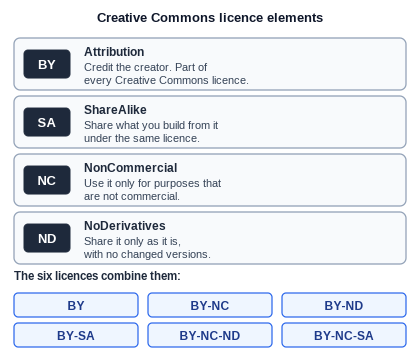
Every Creative Commons licence requires that the creator be credited. The creator then chooses which other conditions to add, and four elements combine into six licences.
Legal and Ethical Concerns
Computing can play a role in social and political issues, which in turn often raises legal and ethical concerns.Innovations enabled by computing raise legal and ethical concerns:
• the development of software that allows access to digital media downloads and streaming, including downloading pirated software and movies and illegal streaming
• the existence of computing devices that collect and analyze data by continuously monitoring activities
• the development of algorithms that include bias
As with any technology or medium, using computing to harm individuals or groups of people raises legal and ethical concerns. The digital divide raises ethical concerns around computing as well.