The Digital Divide and Computing Bias
The Digital Divide
Internet access varies between socioeconomic, geographic, and demographic characteristics, as well as between countries.The digital divide is the gap that exists between individuals who have access to modern information and communication technology and those who lack access. This difference in access to computing devices and technology is based on socioeconomic, geographic, or demographic characteristics.
The digital divide:
• can affect both groups and individuals
• raises issues of equity, access, and influence, both globally and locally
• raises ethical concerns around computing
• is affected by the actions of individuals, organizations, and governments
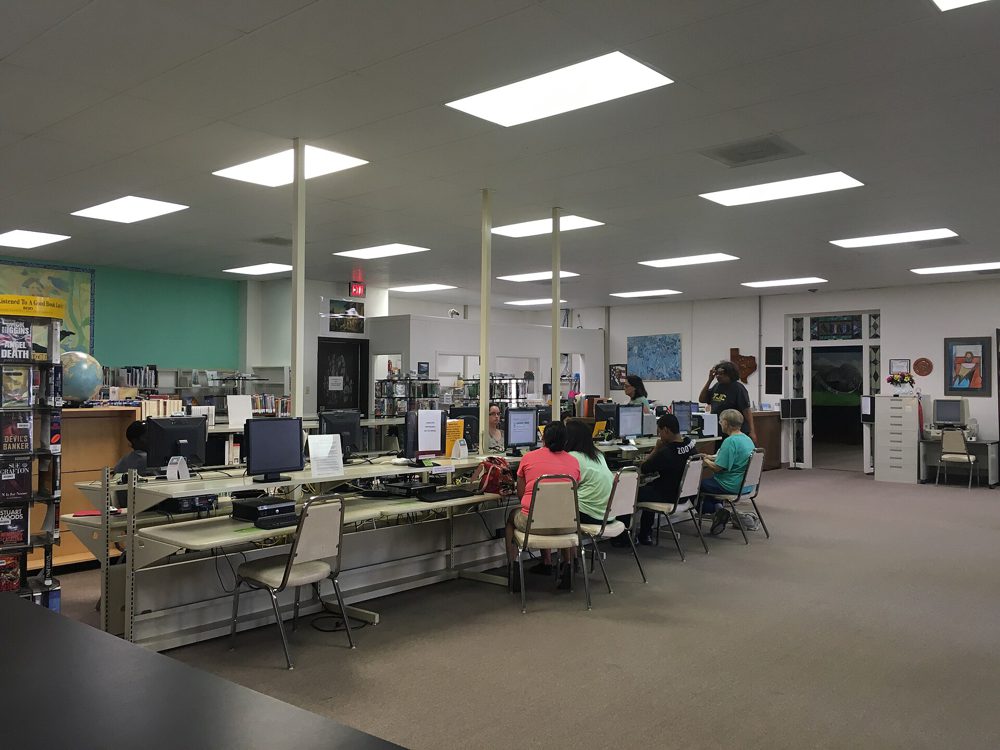
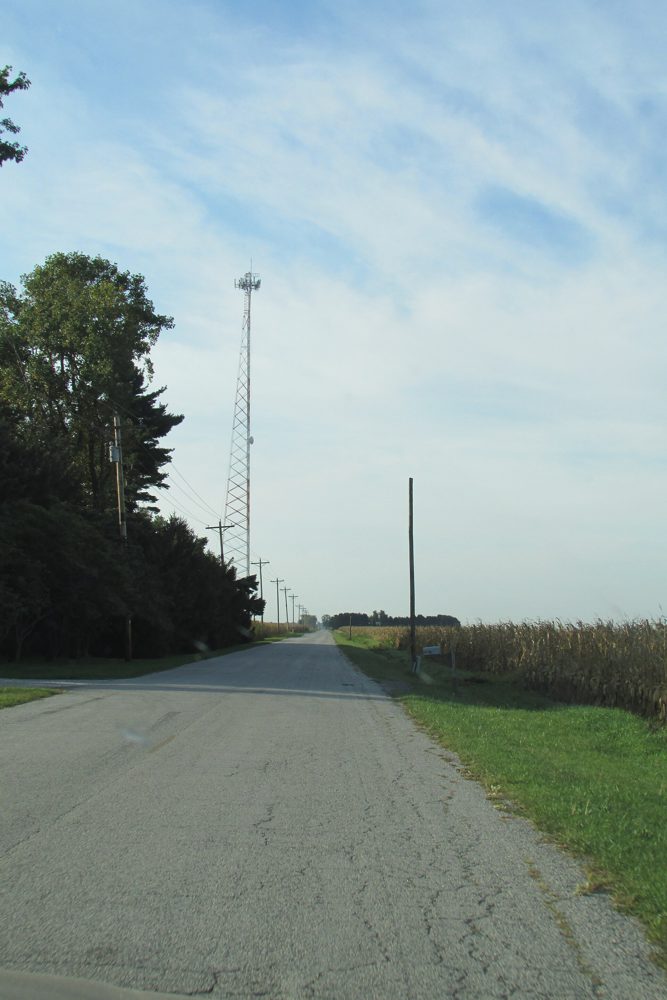
Left: a public library computer lab, where people without a home connection can get online. Right: a cell tower on a rural road, where towers stand far apart. Photos: Texas State Library and Archives Commission, CC BY 2.0; Chris Light, CC BY-SA 4.0; via Wikimedia Commons.
Computing Bias
Computing innovations can reflect existing human biases because of biases written into the algorithms or biases in the data used by the innovation.There are two sources in that sentence, and the second one is the one that catches people. A system can be biased with nothing biased anywhere in its instructions, because it was shown a biased picture of the world and learned it faithfully.
| Example | What goes wrong | Where the bias came from |
|---|---|---|
| Facial recognition | Works less well on women and minorities | The training sets often contain fewer images of them than of men in the majority |
| Alexa | For a time, struggled with understanding different accents | The speech it learned from did not represent everyone who would speak to it |
| Google Translate | Introduces gender into translations that had none | The text it learned from carried the association, so the translation reproduces it |
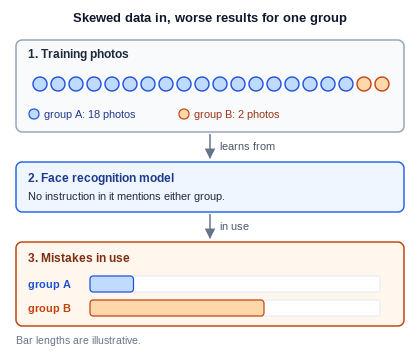
Programmers should take action to reduce bias in algorithms used for computing innovations as a way of combating existing human biases.
Biases can be embedded at all levels of software development. Choosing what to build, choosing what to collect, choosing what to measure, choosing what counts as good enough to release: a bias can enter at any of them, which is why checking the finished program's instructions is not enough on its own.