Networks, LANs and Switches
The Internet
The Internet is many computers. Some are small, like your cell phone. Some are even smaller, like a router, a robot floor vacuum or a smart speaker.All of these computers work together to form the Internet. The Internet is a computer network consisting of interconnected networks, and those networks use standardized, open (nonproprietary) communication protocols. Protocols are the agreed rules every device follows; the lesson on MAC addresses, IP addresses and routers explains what open means.
The Internet is many computers communicating with one another. They might communicate over radio waves, like WiFi or Bluetooth, or over physical cables, like Ethernet or cable TV.
One of the remarkable features of the Internet is that the computers connected are not aware how they are connected. They are able to communicate over many different kinds of connections.
Access to the Internet depends on the ability to connect a computing device to an Internet-connected device. A phone gets online by joining a WiFi router that is itself connected. A laptop with no such connection cannot reach anything, however fast it is.
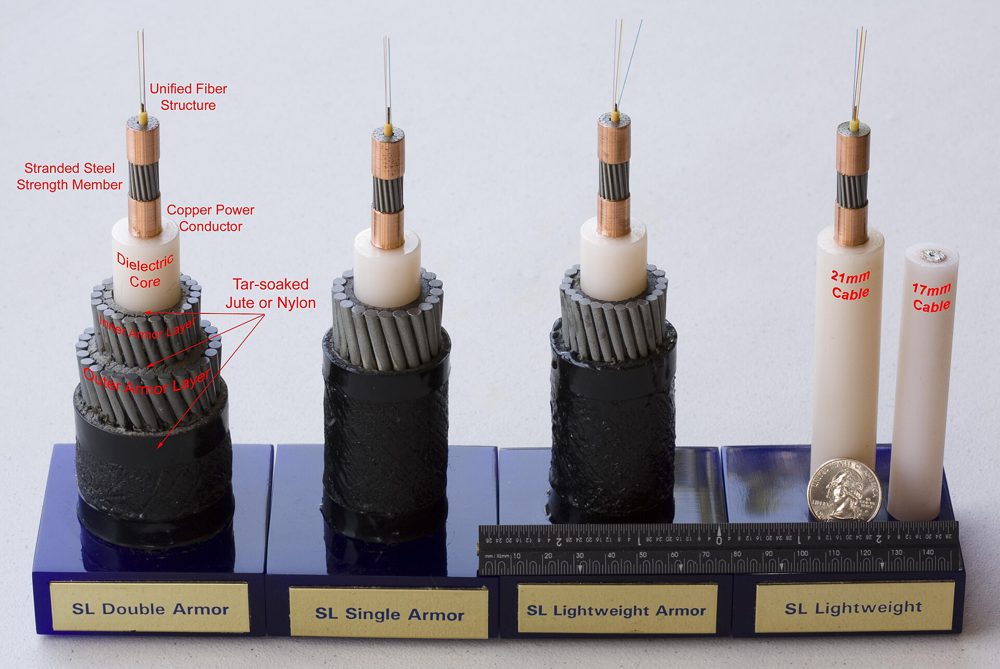
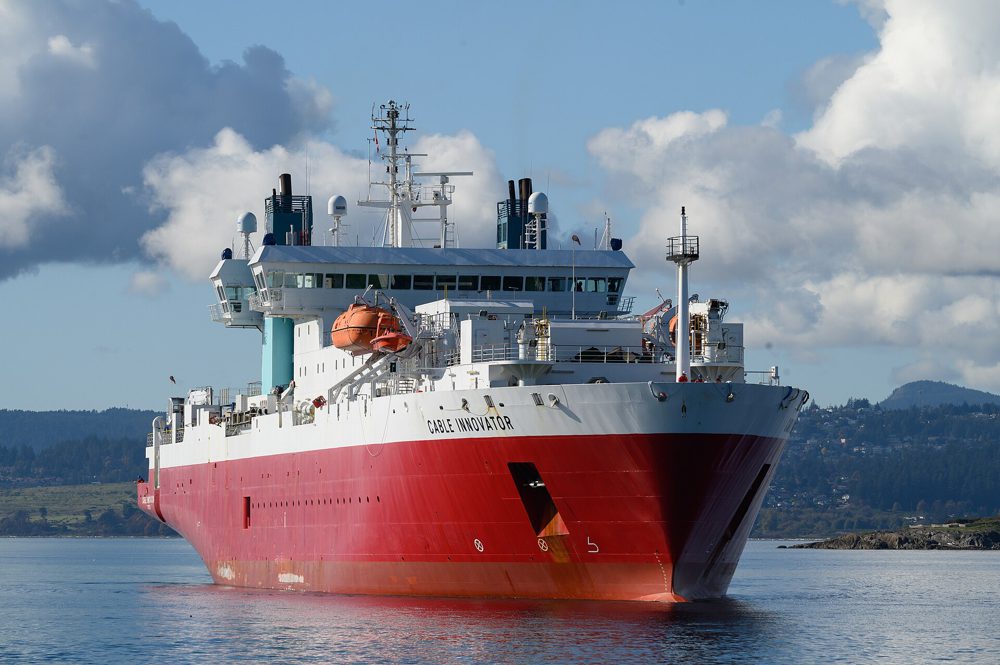
Much of the data that crosses oceans travels through cables on the sea floor. Left: samples of undersea cable. Right: a ship that lays it. Photos: Lonnie Hagadorn, CC BY-SA 4.0; Gordon Leggett, CC BY 4.0; via Wikimedia Commons.
Devices, networks and hosts
A computing device is a physical artifact that can run a program. Some examples include computers, tablets and phones.A computer network is a group of interconnected computing devices capable of sending or receiving data.
A host is a computer on a network.
Notice how little the second definition asks for. It says nothing about size, nothing about wires, and nothing about the Internet. A group of devices that can send data to each other is a network already.
LAN and WAN
A local area network (LAN) is a group of interconnected computers that share resources in a small geographic area. The smallest example of a LAN is two computers connected by a CAT6 cable, which is an ethernet cable.A wide area network (WAN) is a network of connected local area networks. By this definition, a university campus network that joins the local area networks of many buildings is a WAN. The name is used most often for networks that stretch across cities or countries, such as a company's network joining offices on different continents.
| LAN | WAN | |
|---|---|---|
| What it joins together | Computing devices | Local area networks |
| How far it reaches | A small geographic area | As far as the networks it joins |
| Smallest version of it | Two computers and one cable | Two local area networks, joined |
| A typical example | Computers sharing resources in one place | A campus joining many buildings' networks |
Computing systems, clients and servers
A computing system is a group of computing devices and programs working together for a common purpose. A computer network is a type of computing system.A path between two computing devices on a computer network, a sender and a receiver, is a sequence of directly connected computing devices that begins at the sender and ends at the receiver.
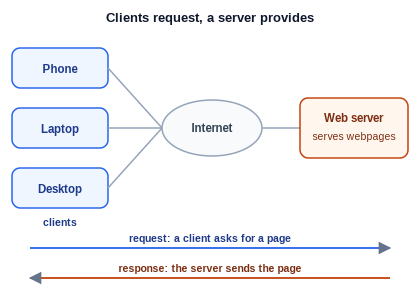
A client is a computer that is requesting a resource or service.
A server is a computer that provides a resource or service. Print servers provide printing service, web servers serve webpages, and there are also email servers and file servers.
Switches
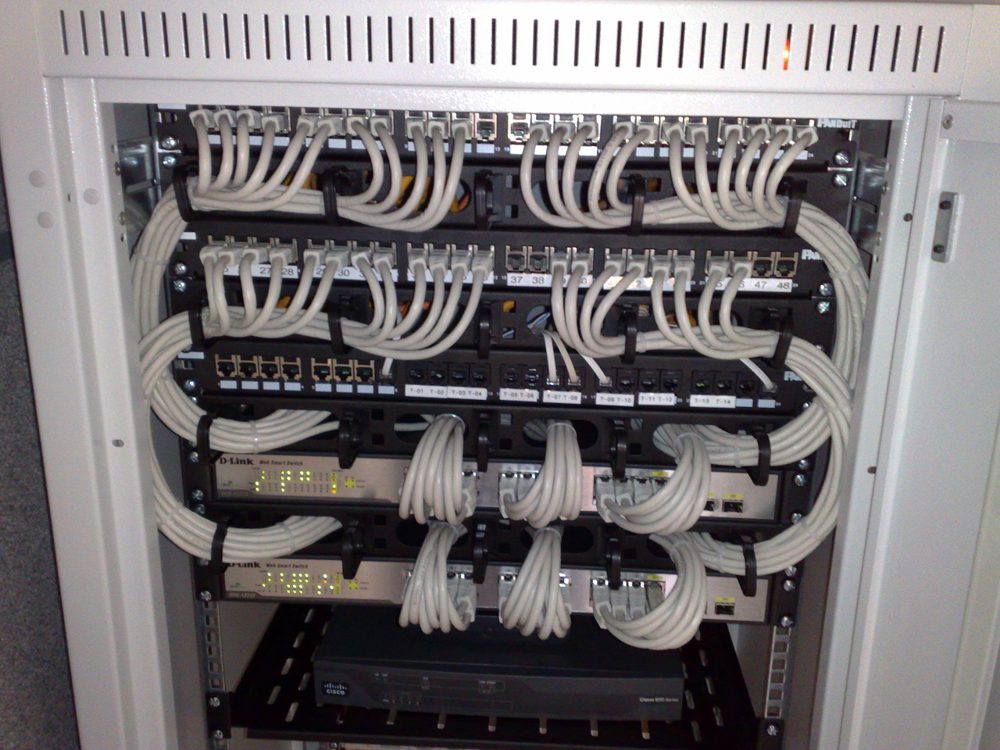
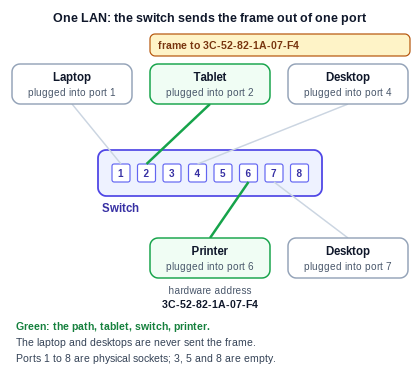
Switches allow computers on a LAN to communicate with one another.A switch is a networking device that can forward data directly to computers connected to its ports using the destination physical address, also called the hardware address. Data sent by a switch is called a frame.
A port is a physical input and output interface to a networking device. Every device on the LAN is plugged into one of them.
For example, a computer sends a request to a printer through a switch. Only the printer sees the request.