Threats, Vulnerabilities, and Physical Access
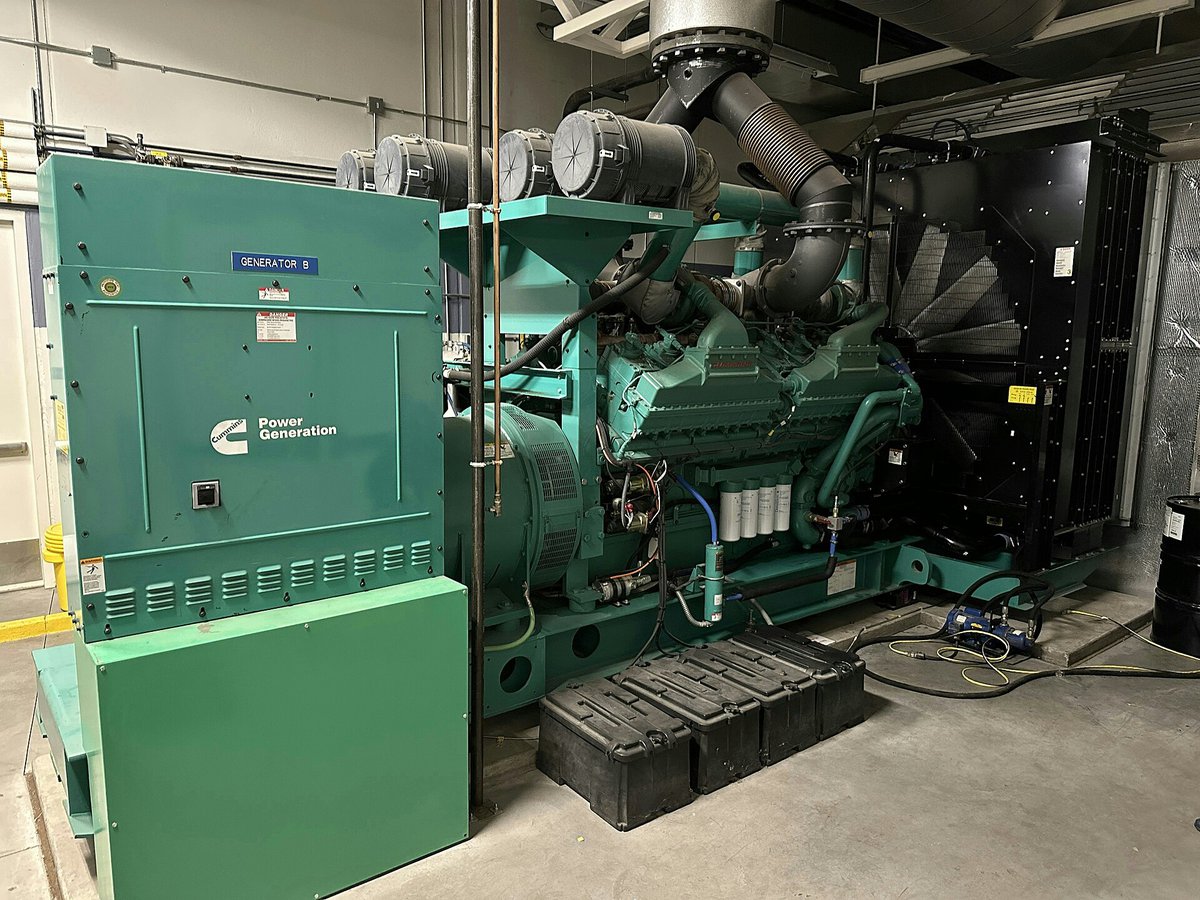
Staff and customers of a data center in lower Manhattan once carried diesel fuel up 17 flights of stairs in buckets. Hurricane Sandy had pushed seawater into the area on October 29, 2012, and flooded the basements where many buildings keep their fuel pumps. The storm also knocked out power to most of Manhattan below 39th Street, so buildings there ran on their own generators or went dark. At 75 Broad Street, the data center company Peer 1 Hosting ran on a backup generator on the 18th floor, but the pump that fed it from the fuel tank below was underwater, so the bucket brigade kept the generator running by hand. Nearby data centers that lost power took popular websites offline with them.
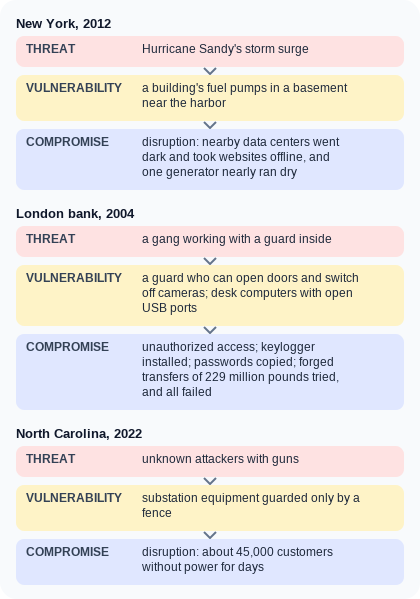
Risk, as the lesson on risk assessment defines it, is a threat exploiting a vulnerability to compromise an asset. Physical risks read the same way: a threat, a vulnerability it can exploit, and the compromise that follows.
Here the storm is the threat and the basement pump is the vulnerability. The compromise is the disruption: one data center kept running only by hand, and others nearby went dark along with the websites they served.

Inside a London bank
A supervisor on the security staff at the London office of Sumitomo Mitsui, a Japanese bank, let a small group in after hours one night in September 2004 and interfered with the cameras. The visitors plugged a USB memory stick into several workstations and loaded a keylogger, a program that records each key a person presses. Over the next few weeks it collected the passwords staff typed to sign in to the bank's payment systems. The passwords were copied, not taken; staff kept typing them, unaware. About a month later, on a weekend when the desks were empty, the gang came back and tried to use them to send about 229 million pounds to accounts in other countries.
The transfers failed, partly because the gang filled in the payment forms wrong, and the plot came to light when staff noticed their computers had been tampered with. The bank didn't lose any money. The gang needed two weaknesses to get that far, one about people and one about machines; name both.
They needed a guard who could open the doors and switch off the cameras, and desk computers whose ports anyone standing at them could use. Together those were enough to let strangers sit at the bank's own machines. The gang, with a man inside, was the threat; the compromise was unauthorized access, to the building and then to the passwords.
Two substations
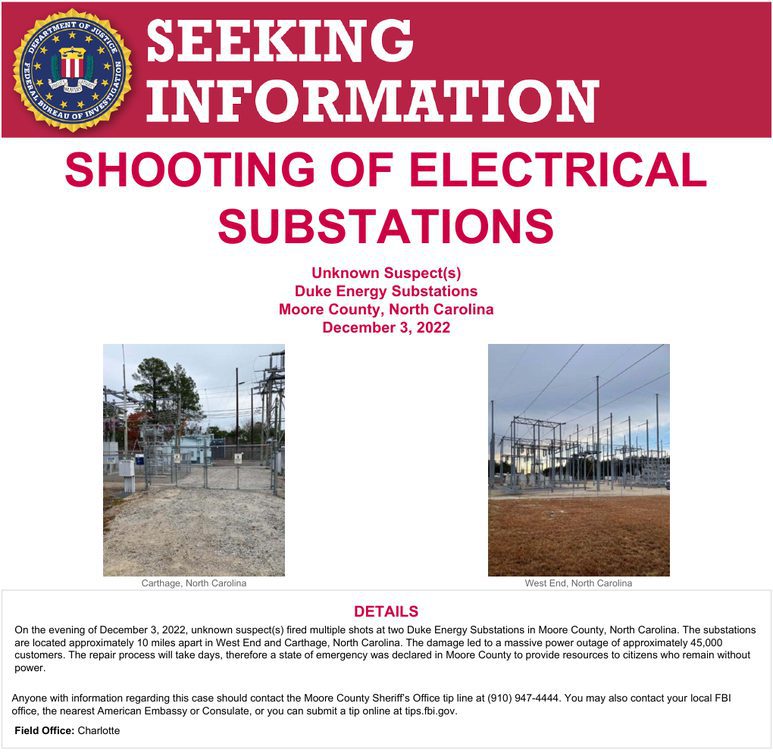
Someone fired about two dozen rifle rounds into two electrical substations in Moore County, North Carolina, on the evening of December 3, 2022. A substation is the fenced yard of equipment that steps power down from long-distance lines for a town's wires, and these stood behind fences. Both failed, and about 45,000 homes and businesses lost power, most of them for about four days, in near-freezing weather. The county set a nighttime curfew while crews replaced damaged equipment. Which compromise from the vulnerability definition was this?
The bullets did destroy equipment, which is destruction of physical resources, but what 45,000 customers felt was the other compromise: disruption of services. Every device on those lines without its own backup power, and every service it provided, went dark at once.
The investigations
In Moore County, the FBI asked the public for information and offered a reward, as did the state. Investigators obtained search warrants within days. No one had been charged as of December 2025, and the sheriff said only that the investigation continued.
Sources: The Register and Computing coverage of the Sumitomo Mitsui trial (January-March 2009); Moore County Sheriff's Office and Duke Energy statements (December 2022); FBI Charlotte reward notice and WUNC coverage of the search warrants (December 2022); ABC11 coverage of the third anniversary (December 2025); Peer 1 Hosting and press coverage of the 75 Broad Street bucket brigade and the Datagram outage (October-November 2012).